What Employers Need to Know
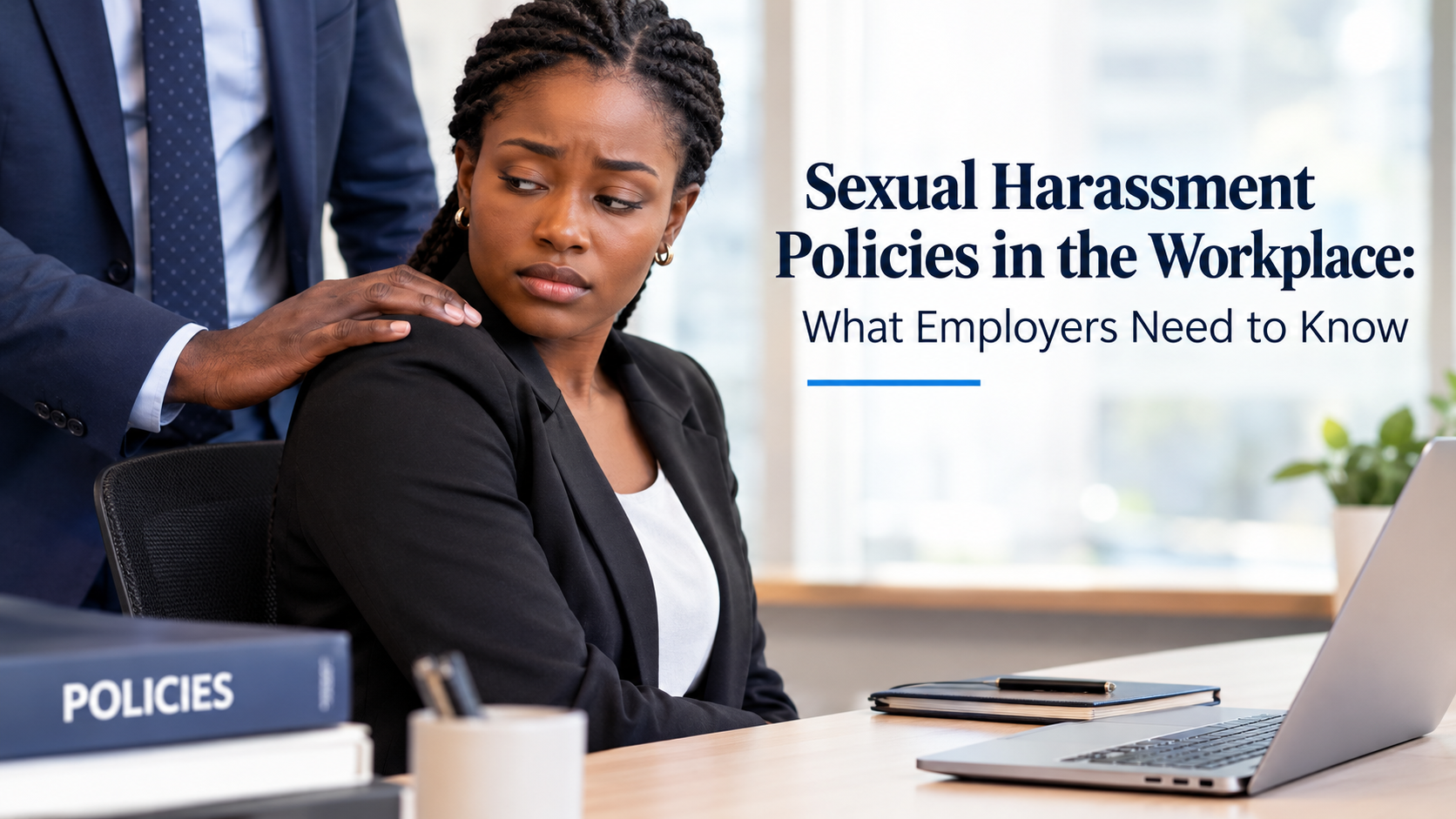
A workplace should be free from unwanted sexual conduct. In Kenya, this isn't just an HR matter, it's a legal requirement and employers who don't comply face real risk.
The Law
Section 6 of the Employment Act, 2007 requires employers with 20 or more employees to issue a sexual harassment policy, developed after consulting employees.
Sexual harassment may includes:
- requests for sexual favors tied to employment promises or threats
- sexual language, spoken or written
- sexual images or visual material
- unwelcome physical conduct of a sexual nature affecting the employee's work
It doesn't have to involve touching. Courts have confirmed that sexual language used against an employee, qualifies (J W N v Securex Agencies (K) Limited [2018]).
Having a general employee handbook isn't enough. In Mutahi v British Army Training Unit Kenya [2017], the court held that merely listing sexual harassment as gross misconduct didn't satisfy section 6. The employer was ordered to create a proper policy with clear reporting and investigation procedures.
What the Policy Must Cover
A clear definition with concrete examples (unwanted comments, jokes, touching, explicit messages, employment-linked demands) so employees know exactly what's prohibited.
A right to a harassment-free workplace stated explicitly.
Prevention measures induction, training, reporting channels, supervision, and regular policy review.
A complaints procedure — employees must know exactly who to report to (HR, a designated officer, senior management), with an alternative channel if the accused is the usual contact person. A policy with no working reporting mechanism offers little real protection (MWM v MFS [2014]).
Confidentiality — the complainant's identity shouldn't be disclosed except where necessary for investigation or discipline. But this doesn't override the accused's right to know the allegations and respond, as balanced in Boniface Mzungu v Base Titanium Limited [2020].
Anti-retaliation protection for complainants, witnesses, and anyone involved in the process.
Coverage beyond the office — work trips, conferences, client meetings, and digital communications (WhatsApp, email, social media) should all be covered.
Handling a Complaint
- Receive and record the complaint
- Assess risk — consider interim measures to protect those involved, without pre-judging the accused
- Investigate objectively, gathering evidence (messages, records, witness statements)
- Let the accused respond — an allegation is not a finding
- Decide and act in line with the policy and the Employment Act
- Follow up to prevent recurrence
Having a Policy Isn't Enough — Implement It
Courts have repeatedly stressed that a policy must work in practice. In Maiyo v Kenya Commercial Bank [2024], the court found that having a policy on paper wasn't sufficient, how the complaint was actually handled mattered. In Murithi v SGS Kenya Limited [2022], the employer's failure to publicize its policy was treated as an aggravating factor.
Adopting a policy is compliance on paper. Implementing it is compliance in practice.
Risks of Non-Compliance
No policy, or a poorly implemented one, can expose employers to employment claims, procedural challenges in disciplinary cases, reputational damage, and workplace disruption.
Quick Compliance Checklist
- Written policy compliant with section 6, developed through consultation
- Clear, accessible, confidential reporting channels (with an alternative if the alleged harasser is the usual contact)
- Defined investigation process with trained investigators
- Fair process for the accused
- Confidentiality safeguards
- Anti-retaliation protection
- Regular training for staff and management
- Policy actually communicated to employees and reviewed periodically
How We Can Help
At Wanjiru Nyaguthi & Company Advocates, we help employers develop and review workplace policies — including sexual harassment policies — and advise on handling complaints and disciplinary processes correctly.