Learn what each approval actually covers, why developers commonly confuse them and what to check before you break ground.
Introduction
Many property developers assume that once they have one regulatory approval in hand, they are cleared to build. This assumption is one of the most common mistake in Kenyan property development.
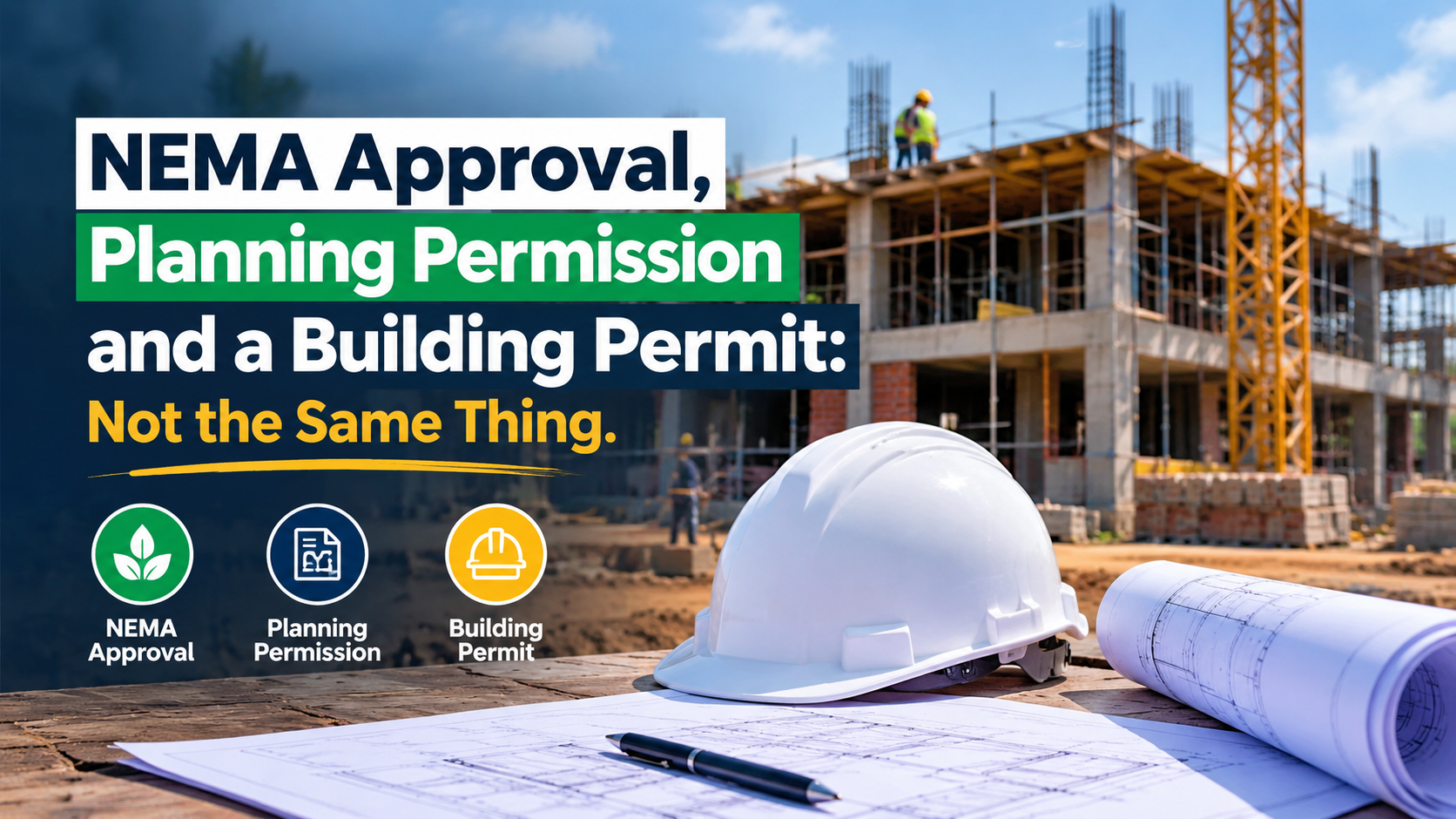
NEMA environmental approval, planning permission and a building permit each answer a different legal question. Holding one does not mean the requirements for the others have been met. A developer who starts construction on that assumption risks stop orders, penalties, and costs that dwarf what proper due diligence would have cost at the outset.
Here is what each approval actually covers, and why a development typically needs all three before the first foundation is dug.
1. NEMA Environmental Approval: What Will This Project Do to Its Surroundings?
The National Environment Management Authority regulates the environmental impact of development in Kenya. Depending on a project's scale and nature, a developer may need to carry out an environmental assessment and secure NEMA's approval before proceeding.
This process looks at issues such as:
- Waste management
- Water resources
- Drainage and stormwater
- Noise and vibration
- Air quality
- Vegetation and biodiversity
- Traffic impact
- Cumulative effects on the surrounding area
Environmental due diligence belongs at the planning stage of a project, not as an afterthought once construction is imminent. And critically, NEMA approval on its own does not authorize construction. It clears one hurdle, not all of them.
2. Planning Permission: Is This Land Use Allowed Here?
Planning permission is about land use, not construction. The relevant county or planning authority assesses whether a proposed development fits within applicable zoning and development control requirements, and whether it is compatible with the surrounding area.
Matters considered typically include:
- Whether the proposed use is permitted on the property
- Scale and intensity of development
- Plot coverage and density
- Building height, setbacks and building lines
- Access, circulation and parking
- Fit with the local physical and land-use planning framework
This is especially important where a developer intends to change how a property is used. Land historically zoned for residential use cannot simply be repurposed for a commercial or mixed-use project without the necessary planning approval.
3. Building Permit: Does the Building Itself Meet Construction Standards?
A building permit is concerned with the physical structure, whether the proposed building plans and construction methods comply with building control requirements. This includes:
- Structural safety
- Building design
- Fire safety
- Sanitation
- Accessibility
- Ventilation and lighting
- Building services
- Other applicable technical requirements
Approval to use land in a particular way is not the same as approval to construct a particular building on it. Planning permission and a building permit sit close together in the development timeline, but they answer different questions.
Why the Confusion Happens
Because these approvals are part of one continuous development process, it's easy to assume that clearing one step clears them all. A developer who has secured planning approval may assume construction can begin immediately. A developer with NEMA approval may believe all regulatory boxes are ticked. Neither assumption holds.
The Cost of Getting It Wrong
Breaking ground without the required approvals invites enforcement action: injunction orders, remedial requirements, or other measures under the applicable legislation. The commercial fallout compounds quickly —
- Construction delays
- Additional contractor and financing costs
- Disputes with purchasers or tenants
- Difficulty securing project financing
- Reputational damage
- Legal proceedings
Regulatory compliance is not paperwork to handle after the real decisions have been made. It is part of the real decision-making.
What to Establish Before You Commit Resources
Before purchasing land or starting construction, a developer should have clear answers on:
- The property's permitted use
- Whether a change of user or other planning approval is needed
- Environmental assessment and approval requirements
- Building approval requirements
- Any sector-specific approvals that may apply
- Restrictions arising from location, title, zoning or development plans
Identifying these issues early is far cheaper than discovering them after the project has broken ground.
The question to ask before starting any development is not "Do we have a permit?" It is:
"Have we obtained every approval this particular development requires?"
Getting this right from the outset is what prevents the delays, enforcement action and disputes that derail projects later on.
How We Can Help
We advise developers, landowners and investors on the full regulatory sequence a development must clear before construction begins. This includes:
- Conducting due diligence on a property's title, zoning and permitted use before you commit to a purchase.
- Advising on whether a change of user application is required, and guiding it through the relevant county approval process.
- Reviewing environmental assessment requirements and coordinating the NEMA approval process where applicable.
- Guiding developers through planning and building permit applications, and liaising with the relevant authorities on your behalf.
- Running a pre-construction compliance review to confirm every required approval is in place before ground is broken.
- Advising on regulatory risk for change-of-user applications, mixed-use projects and developments in planning- or environmentally-sensitive areas.