How the Process Works
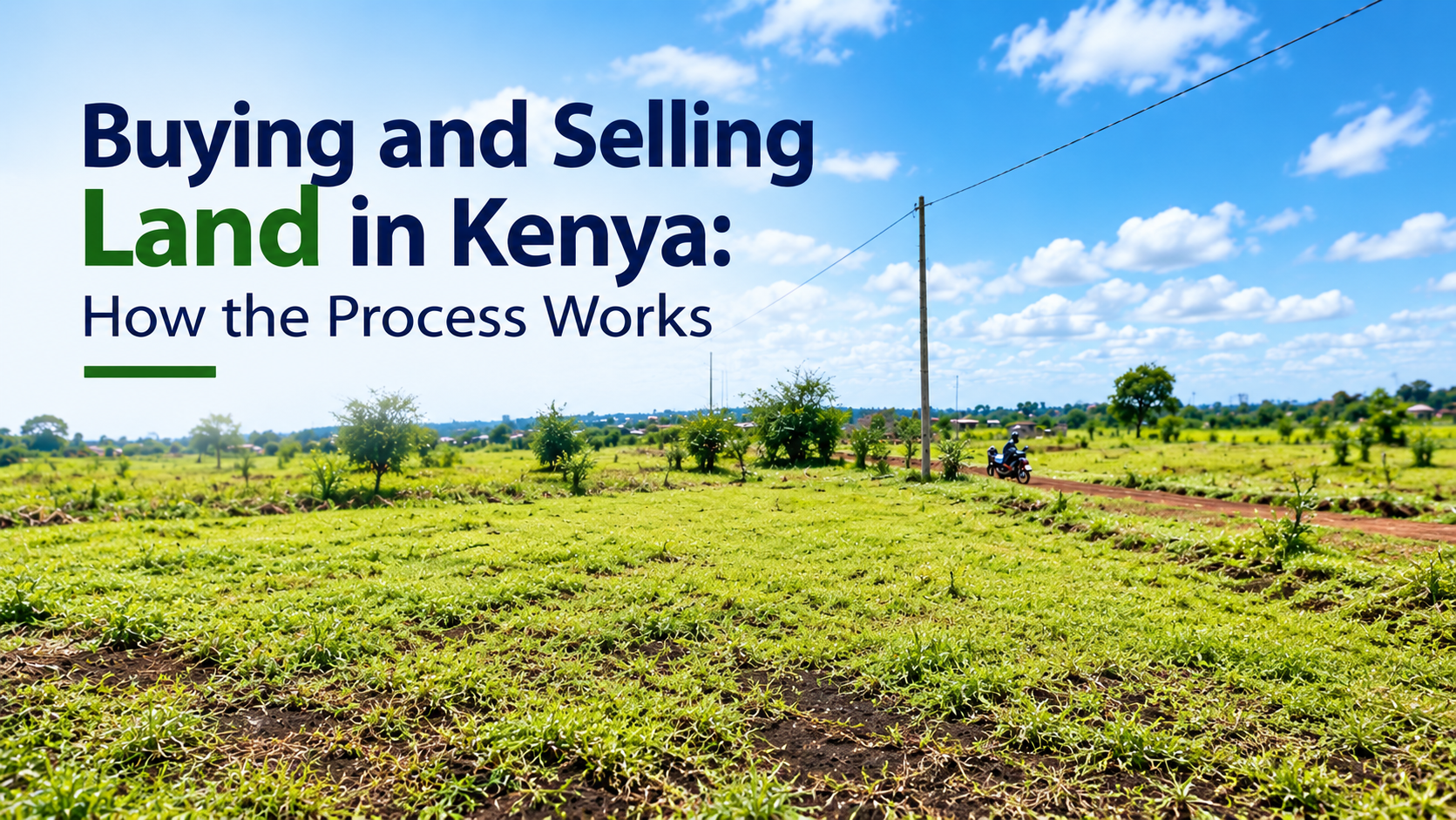
The law requires a formal process of the legal transfer of ownership from seller to buyer, ending with the buyer being registered as the new proprietor at the Land Registry. Done properly, conveyancing protects both parties and catches problems before they become costly. Here's how it works.
1. Engage an Advocate
Get a lawyer involved from the start, not after you've paid a deposit. Your advocate will run due diligence, review the title, draft or check the sale agreement, and guide the transaction through to registration. Many issues such as cautions, disputes, unpaid rates, succession problems aren't visible from simply looking at the land.
2. Do Your Due Diligence
Before committing, the buyer should through their advocate carry out an official title and green card searches at the Land Registry to confirm who legally owns the property and whether it carries any charges, cautions or restrictions.
Depending on the property, due diligence may also involve:
- Confirming the seller's identity and the original title
- Checking the acreage and description match the title
- Verifying land rates and land rent are paid up
- Checking the permitted use, zoning and any boundary issues
- Establishing whether spousal or third-party rights are involved
- Reviewing succession or company documents, if the owner is deceased or the property is company-owned
3. Negotiate and Sign the Sale Agreement
The Agreement for Sale sets out the deal. This includes the purchase price, deposit, payment schedule, completion date, what documents the seller must provide, and what happens if either party defaults.
Kenyan law requires this agreement to be in writing, signed by both parties, with signatures witnessed. A well-drafted agreement is what makes the rest of the process enforceable.
4. Pay the Deposit
An agreed deposit is usually paid on signing, often held by the seller's advocate pending completion. The balance is paid once all completion requirements are met.
5. Get the Required Consents
Some transactions can't proceed without specific approvals. Agricultural land within a land control area, for example, needs Land Control Board (LCB) consent and the application must be made within six months of signing the agreement. Skipping this step can be fatal to the transaction.
Other consents that may apply: rates and rent clearance, spousal consent, company approval, or probate documents if the land is part of a deceased person's estate.
6. Valuation and Stamp Duty
Before registration, the property is valued and stamp duty is paid. This amount is currently either 2% or 4% of the property value, depending on its classification.
7. Capital Gains Tax
The seller pays Capital Gains Tax at 15% of the net gain made on the sale, unless an exemption applies. This is separate from stamp duty as CGT falls on the seller while stamp duty is generally a buyer cost.
8. Prepare and Sign the Transfer
Once everything above is in order, the transfer document is prepared and executed. This is the actual instrument that moves ownership from seller to buyer.
9. Completion and Registration
The parties exchange final completion documents and payment, and the advocate lodges the transfer for registration. This is the step that legally makes the buyer the owner.
10. New Title Issued
Once registered, the buyer receives the new title. Check it carefully to verify the correct name, parcel number, size, and any encumbrances appear on the new title.
How Long Does It Take?
There's no fixed timeline. A clean title with no outstanding issues can move quickly. Financing, LCB consent, succession matters, or title discrepancies will slow things down.
What Commonly Causes Delays
- Existing charges, cautions or restrictions on the title
- Unpaid land rates or rent
- Missing or inconsistent documents
- LCB consent requirements
- Succession issues (land registered to a deceased owner)
- Company-owned property without proper authorization
- Mortgage financing requirements
- Boundary or survey discrepancies
Before You Buy, Ask:
- Who legally owns the property, and can they sell it?
- Are there any charges, cautions or restrictions?
- Are rates and land rent up to date?
- Is it agricultural land subject to LCB consent?
- Could a spouse or third party have an interest in it?
- Does the land match the title and survey records?
- What documents will the seller provide at completion?
- What taxes and costs should you budget for?
Paying the price and taking possession isn't the same as owning the land in law. Ownership only transfers once registration is complete.
How We Can Help
At Wanjiru Nyaguthi & Company Advocates, we guide clients through every stage of conveyancing , from due diligence to registration for residential, commercial and agricultural property. Our services include land searches, sale agreement drafting and negotiation, LCB consent applications, rates and rent clearance, stamp duty processing, transfers, leases, and risk advice for buyers, sellers, investors and developers.
Get legal advice before you commit — it's far cheaper than fixing a problem after the money has changed hands.